
Reliable IT support for businesses with 15+ employees across Rockville and the DMV, guided by experts who actually know their stuff.
Enjoy your first month free with zero onboarding fees.
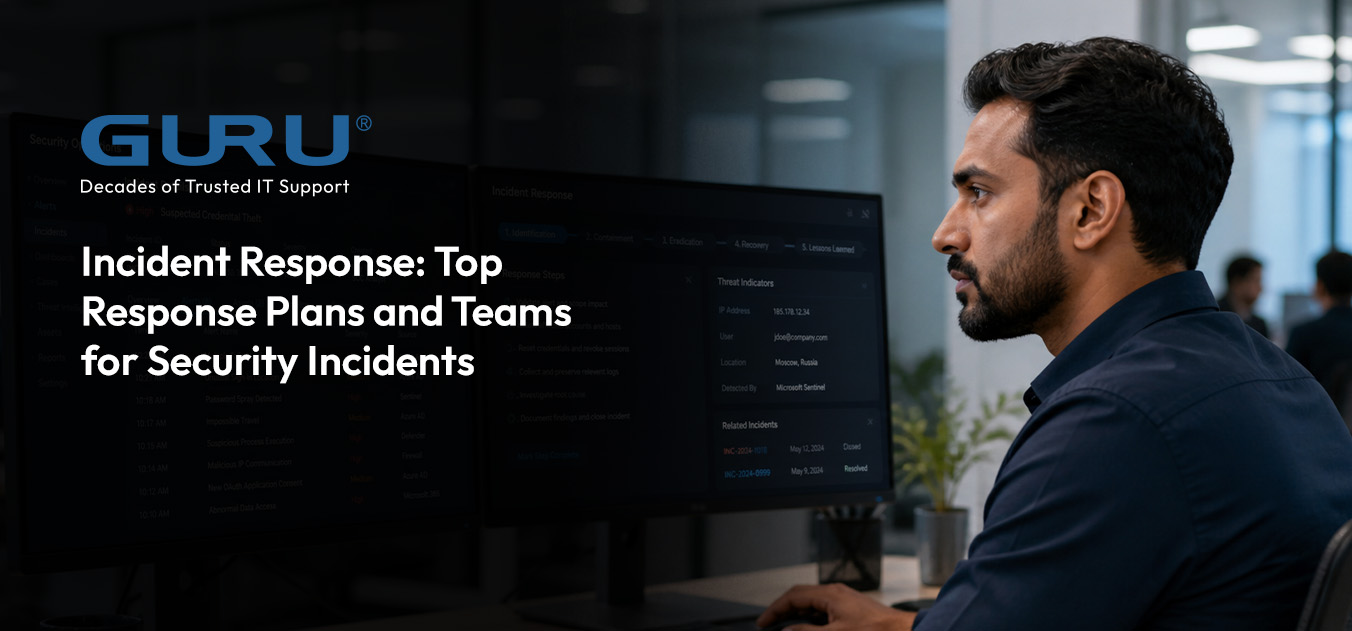
Every business that uses technology faces the risk of security incidents. Understanding incident response is essential for protecting your data, reputation, and operations. In this blog, you’ll learn what incident response means for your business, why having an incident response plan matters, and how incident response teams work together to handle threats. We’ll also cover how cybersecurity and incident response services can help you detect and respond to cyber threats, and what makes an effective response framework. By the end, you’ll know the steps to build a strong incident management process, how to automate response, and how to keep your security team prepared for any cybersecurity incident.
Incident response is the organized approach a business takes to address and manage the aftermath of a security breach or cyberattack. The main goal is to handle the situation in a way that limits damage and reduces recovery time and costs. Without a clear incident response plan, even a small security incident can quickly grow into a major problem, causing data loss, downtime, and financial loss.
Having a reliable incident response process helps your business stay prepared for different types of cyber threats. It also ensures your security operations team knows exactly what to do when an incident occurs. By following a proven response framework, you can protect sensitive information, meet compliance requirements, and maintain trust with your customers.

A strong incident response process involves several key steps. Below, we break down the most important actions your business should take to stay ready and resilient.
Preparation is the foundation of any successful incident response. This includes creating policies, training team members, and setting up the right detection and response tools. When everyone knows their role, your business can act quickly and confidently.
Identifying a security incident early can make all the difference. Use monitoring systems and regular security checks to spot unusual activity. Fast identification helps you limit the impact and start your response quickly.
Once you know an incident is happening, the next step is to contain it. This means isolating affected systems or accounts to prevent the problem from spreading. Quick containment protects your network and data from further harm.
After containing the threat, you need to remove it from your systems. This could involve deleting malicious files, closing vulnerabilities, or updating software. Eradication ensures the attacker can’t regain access.
Recovery is about getting your business back to normal. Restore affected systems, double-check that the threat is gone, and monitor for any signs of trouble. Good recovery practices help you avoid repeat incidents.
Every incident is a chance to improve. After recovery, review what happened, what worked, and what didn’t. Update your incident response plan and train your team based on these lessons.
A good incident response plan should include these key features:

Incident response teams are made up of IT professionals, analysts, and managers who work together to handle security incidents. Each team member has a specific role, from detecting threats to communicating with stakeholders. This teamwork is critical for quick and effective incident management.
A well-organized team follows a response framework that outlines who does what at each phase of the incident response. This structure helps avoid confusion and ensures nothing is missed. Regular training and clear communication keep everyone ready to act when needed.
Modern businesses use a variety of tools and technologies to support their incident response efforts. Here are some of the most important types and how they fit into your strategy.
Endpoint security tools help protect devices like laptops, servers, and mobile phones. These tools can detect and block threats before they reach your network, making them a first line of defense.
SIEM systems collect and analyze data from across your IT environment. They help you spot unusual patterns and respond to threats faster by providing real-time alerts.
Automation can speed up your response to security incidents. Automated platforms can isolate affected systems, block malicious traffic, and even notify your team, all without manual intervention.
During a security incident, clear communication is vital. Tools that support secure messaging and file sharing help your team coordinate quickly and safely.
After an incident, forensic tools help you investigate what happened. They can trace the attacker’s steps and provide evidence for legal or compliance purposes.
Threat intelligence services provide up-to-date information on the latest cyber threats. Using this data, your team can stay ahead of attackers and adjust your defenses as needed.

To put an incident response plan into action, start by identifying your most valuable data and systems. Make sure you have reliable systems in place for monitoring and detection. Assign clear roles to your team members and run practice drills to test your response.
Keep your incident response plan up to date by reviewing it regularly and making changes based on new threats or lessons learned. Document every incident and use these records to improve your process. Finally, make sure your communication plan covers both internal and external contacts, so everyone knows what to do if a cybersecurity incident occurs.
Following these best practices can help your business stay prepared:
By following these steps, you can build a process that keeps your business safe and ready for any challenge.

Are you a business with 15-200 employees looking to strengthen your security? As your company grows, so does the risk of cyber threats. It’s important to have a reliable incident response strategy that protects your data and keeps your operations running smoothly.
We understand the challenges of managing security incidents and building effective response plans. Our team at Guru Consult offers expert incident response services, from planning and training to detection and response. Contact us today to see how we can help you stay secure and prepared for any cybersecurity incident.
An incident response plan is a documented set of instructions that helps your business prepare for, detect, and respond to security incidents. It outlines the steps your team should take to contain threats and recover quickly. Having a plan is important because it reduces confusion and speeds up your response, helping you limit damage and protect sensitive information. Regularly updating your plan ensures it stays effective as new threats emerge and your business grows.
Incident response teams are made up of IT staff, analysts, and managers who each have a specific role in handling incidents. When a security incident happens, the team follows a response framework that guides their actions, from detection to recovery. Clear communication and defined responsibilities help the team act quickly and avoid mistakes. Regular training keeps everyone ready to respond to new types of threats.
Your business should be ready for a range of security incidents, including data breaches, ransomware attacks, phishing, and insider threats. Each type of incident requires a different response, so your incident response services should cover all scenarios. By understanding the most common threats, you can tailor your response plans and train your team to handle them effectively.
Automating incident response can help your business react faster to threats. Tools like automated detection and response platforms can isolate affected systems and alert your team right away. By using automation, you reduce manual work and make sure your response is consistent every time. This is especially helpful for growing businesses that need to manage multiple security operations with limited resources.
The incident response lifecycle is the series of phases your team follows during an incident, from preparation to lessons learned. Following this lifecycle ensures that every step is covered, from identifying threats to recovering systems and improving your process. Sticking to a clear lifecycle helps your business stay organized and ready for future incidents.
The future of incident response will include more automation, better detection tools, and increased focus on training. Small businesses will need to stay updated on the latest technologies and threats to keep their data safe. By investing in modern tools and regular training, you can build a strong defense against cyber threats and keep your business running smoothly.

Jason Huebner is the President of GURU and an eleven-year veteran of the company, having risen through the ranks by consistently delivering results and building strong relationships.
Reliable IT support for businesses with 15+ employees across Rockville and the DMV, guided by experts who actually know their stuff.
Enjoy your first month free with zero onboarding fees.