
Reliable IT support for businesses with 15+ employees across Rockville and the DMV, guided by experts who actually know their stuff.
Enjoy your first month free with zero onboarding fees.
Five stages make up the vulnerability management lifecycle, but most companies only staff two of them well. Overlooking the others leaves security gaps that scanning tools alone cannot close, regardless of investment.
It's widely assumed that a vulnerability management system does its job once scanning and patching are running smoothly. In practice, that assumption is where most security programs quietly fail.
A vulnerability management program is only as strong as its weakest stage, and scanning and patching are just two links in a longer chain. Skip or under-resource any other link, and gaps remain open no matter how advanced the scanning tools are. That's why so many businesses stay exposed even after investing heavily in security software.
Closing that gap starts with understanding every stage of the lifecycle, not just the ones that are easiest to automate. Miss the mark on any single stage, and data, reputation, and operations all share the risk.

Many businesses treat regular vulnerability scans and patch cycles as proof that their systems are secure. That belief feels efficient, right up until it creates a false sense of safety.
Scanning and patching are the most visible parts of the vulnerability management process, which is exactly why they're the easiest stages to staff and automate. Lean on only those two, though, and the remaining steps that make a security program actually work slip out of view.
The result is a cycle where new vulnerabilities keep surfacing while the team stays stuck reacting instead of preventing. Left unchecked, that reactive posture is what eventually turns into missed threats and costly breaches.
A reliable vulnerability management program rests on five distinct stages, each playing a role the others can't cover. Skip funding or attention to any one of them, and the whole process weakens accordingly.
Everything starts with knowing exactly what assets exist, since nothing can be protected if it can't first be seen. New devices, applications, and cloud resources tend to multiply faster than most teams expect, which is exactly what makes this stage easy to underestimate.
With a clear inventory in hand, the next task is spotting the weaknesses hiding inside it. This stage leans on vulnerability scanning and assessment tools, and its quality depends directly on how well the assets and their configurations are already understood.
Not every vulnerability deserves equal urgency. This stage weighs factors like asset value, exploitability, and business impact so the most dangerous weaknesses get fixed first instead of the loudest ones.
This is where patches and fixes actually get applied, and because the results are visible, it's usually the best-staffed stage of all. Without the groundwork from the earlier stages, though, that effort can turn unfocused and inefficient fast.
Once remediation is done, confirming that the fixes held and no new issues slipped in becomes essential. This stage also folds in a review of the whole process, feeding lessons back in to sharpen the next cycle.
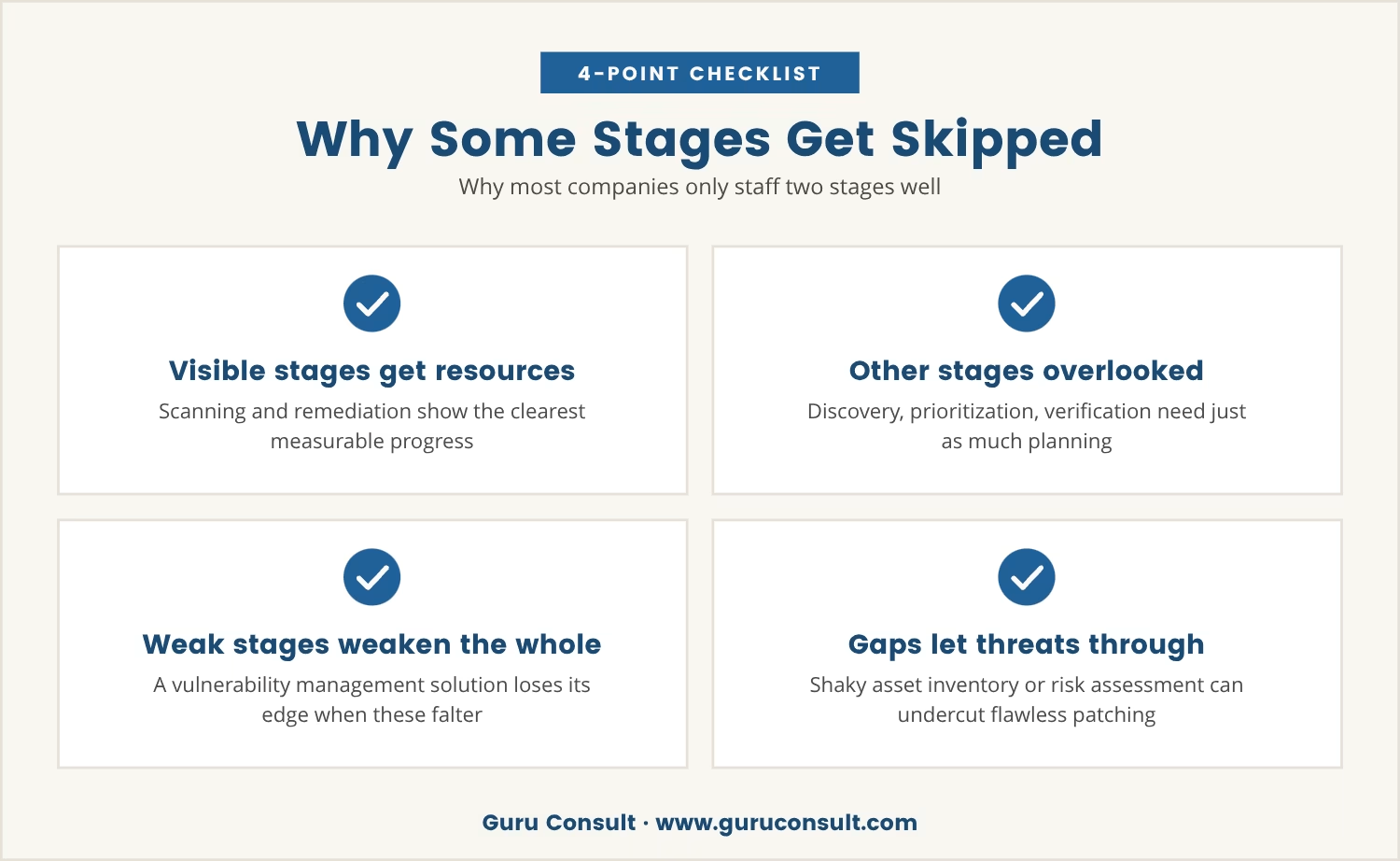
Resources tend to concentrate on vulnerability assessment and remediation, since these are the stages where tools and teams produce the most visible, measurable progress.
Discovery, prioritization, and verification, by contrast, usually get less attention, even though they demand just as much careful planning and cross-team collaboration. They're less glamorous, but no less important to the outcome.
When these three stages stay weak, the vulnerability management solution built around them loses its edge. Gaps in asset inventory or shaky risk assessment can let threats slip through even when the scanning and patching look flawless.
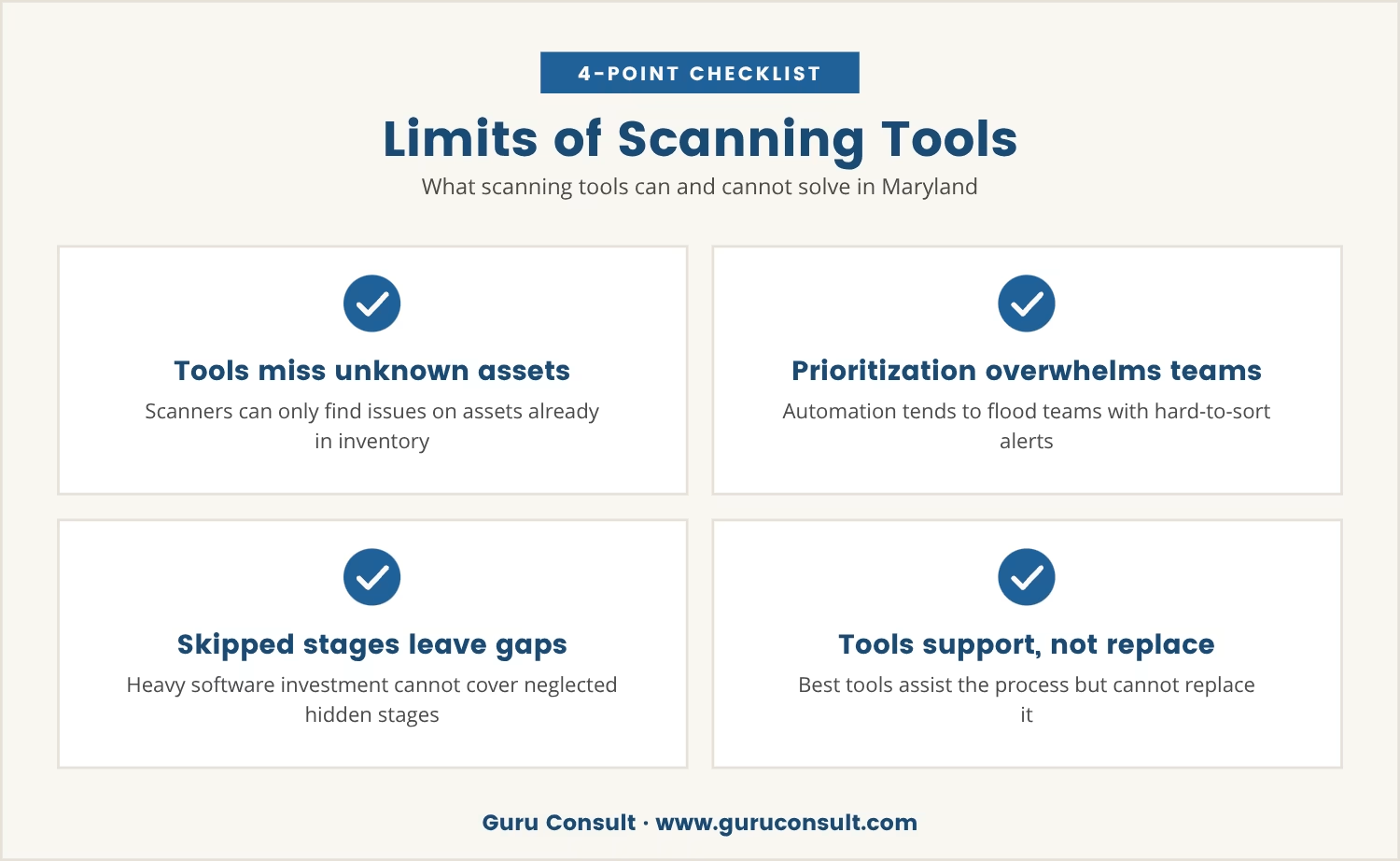
Businesses in Maryland, like those anywhere else, often lean on vulnerability management tools to automate scanning and patching. Powerful as those tools are, they stop short of covering the whole picture.
A vulnerability scanner can only find issues on assets it already knows about, so an incomplete inventory means some systems never get scanned at all. Prioritization is another weak spot for automation, which tends to flood teams with alerts that are hard to sort by actual risk.
So no matter how much gets poured into software, skipping the less-visible stages still leaves the door open. The best tools can support the process, but they were never built to replace it.
Even with a vulnerability management platform already in place, weak points can persist. Watch for these signs:
A strong vulnerability management system takes more than good tools; it takes a balanced approach that covers every stage of the lifecycle at once.
That balance starts with mapping out the current process to see which stages are well-staffed and which are starved for attention, with IT, security, and business units all weighing in so no asset or risk gets overlooked.
From there, training and resources aimed at the less-visible stages, like discovery and verification, help close the gaps scanning tools can't reach on their own. Sustained over time, that balanced approach cuts down on surprises and leaves the overall security posture noticeably stronger.
The real measure of a vulnerability management process is how well it covers all five stages together, not how polished any single one looks. Lean only on scanning and patching, and the risks that automation alone can't solve stay wide open.
Strengthening the weaker stages is what turns a program into one that holds up under pressure, rather than one that merely looks good on paper while leaving the business exposed.

If your business has 15 to 200 employees, you may find that your vulnerability management process is strong in some areas but leaves others exposed. At Guru Consult, we understand how easy it is for the less-visible stages to fall behind when resources are tight.
We invite you to see how our approach addresses the full lifecycle, not just the obvious steps. Let’s talk about what a balanced process could look like for your team.
We’ll buy out your current IT contract for up to 3 months if you qualify, so you can address your security gaps without waiting.
A team that spends most of its time scanning and patching, but rarely reviews asset inventories or verifies fixes, is likely missing important stages. Regular process reviews and cross-team meetings help surface these gaps before they turn into incidents.
Vulnerability prioritization focuses attention on the weaknesses that matter most. Ranking vulnerabilities by risk, exploitability, and business impact makes better use of limited resources and addresses the most dangerous threats first.
Vulnerability management software can automate many tasks, but it cannot fully replace human oversight. Manual checks remain necessary for verifying asset inventories, reviewing risk assessments, and confirming that remediation steps actually worked.
Asset inventories should be updated whenever new devices, applications, or cloud resources enter the environment. Reviewing them at least quarterly helps ensure vulnerability scans cover everything that's actually in use.
Recurring vulnerabilities usually point to weak verification or process review. When fixes aren't properly tested or the underlying cause goes unaddressed, the same weaknesses resurface in later scans.

Jason Huebner is the President of GURU and an eleven-year veteran of the company, having risen through the ranks by consistently delivering results and building strong relationships.
Reliable IT support for businesses with 15+ employees across Rockville and the DMV, guided by experts who actually know their stuff.
Enjoy your first month free with zero onboarding fees.